
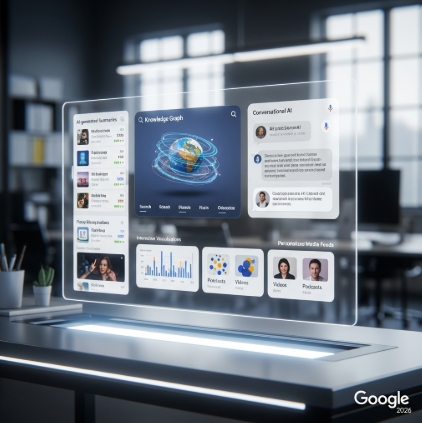

If Google search feels strange lately, you’re not imagining it.
Across the United States, users are noticing:
-
Fewer website links
-
More AI answers
-
Results that feel “shorter”
So what really changed?
The Biggest Change: AI-Powered Search
The biggest reason Google looks different in 2026 is AI integration.
Instead of acting like a directory of websites, Google now acts like:
-
An answer engine
-
A summarizer
-
A decision-maker
This changes how information is presented.
Fewer Blue Links, More Answers
Traditional search results showed:
-
10 blue links
-
Clear sources
-
Multiple viewpoints
Today’s search often shows:
-
One AI answer
-
Limited links
-
Less diversity
This affects how users explore topics.
Why Google Did This
Google’s goals:
-
Reduce time spent searching
-
Increase engagement
-
Compete with AI assistants
But efficiency comes at a cost.
What Users Are Complaining About
Common user complaints in 2026:
-
“I can’t find real blogs”
-
“Everything looks the same”
-
“I don’t trust AI answers”
These concerns are driving users to change how they search.
Is Google Still Useful?
Yes—but differently.
Google works best now for:
-
Simple questions
-
Definitions
-
Quick facts
It works worse for:
-
Research
-
Opinions
-
Comparisons
What Can Users Do?
Smart users now:
-
Scroll more
-
Use advanced search
-
Compare multiple engines
Some are switching engines entirely.
👉 Learn how this impacts search engines and alternatives in:
How Google AI Search Is Changing Results in 2026
What Is Google AI Overviews? A Simple Explanation for Everyday Users (2026)
Is Bing Search Better Than Google AI Search in 2026?
Final Thoughts
Google search isn’t broken—it’s evolving.
Understanding the changes helps users adapt and regain control over their searches.